Michigan winters can be tough on commercial roofs. Heavy snowfall, freezing temperatures, and repeated thawing can damage roofing materials, block drainage systems, and cause unexpected leaks. The best way to protect your building is to schedule a professional roof inspection before winter, address existing damage, and monitor conditions throughout the season. For businesses in Grand Blanc, Flint, and surrounding communities, proactive winter commercial roof care helps reduce disruptions and protect valuable property.
Why Michigan Winters Put Commercial Roofs at Risk
Commercial roofing systems face several challenges when temperatures drop. Unlike steep residential roofs, many commercial buildings have low-slope or flat roofs where snow and meltwater can accumulate.
Three common winter concerns include:
- Heavy snow accumulation: Snow adds weight to the roof, especially when it becomes wet or compacted.
- Freeze-thaw cycles: Water can enter small openings, freeze, expand, and worsen existing damage.
- Blocked drainage: Ice and debris can prevent melting snow from draining properly.
These problems can affect warehouses, office buildings, retail centers, and industrial facilities throughout Mid-Michigan.
The National Weather Service also warns that excessive snow weight can contribute to roof failures. Property owners should never assume their roof can safely support every winter snowfall without assessment.
5 Essential Winter Commercial Roof Care Tips
1. Schedule a Professional Inspection Before Snow Arrives
A fall roof inspection is one of the most practical ways to prepare for Michigan winter weather.
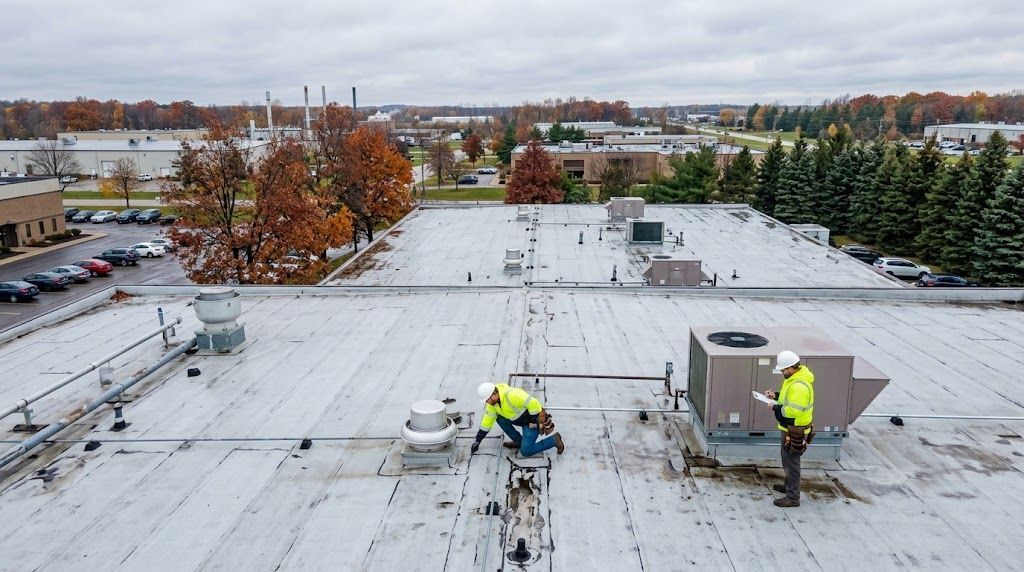
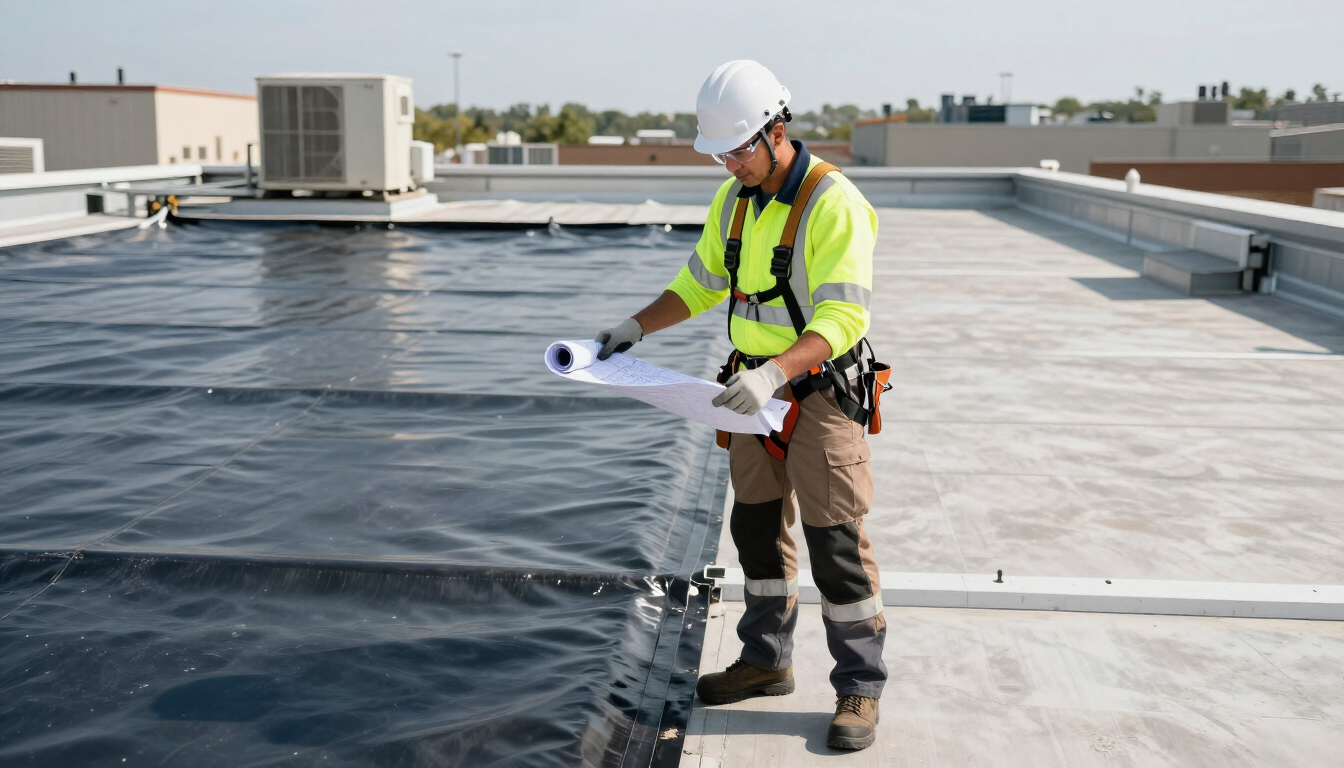
During an inspection, roofing professionals can examine seams, flashing, drainage components, rooftop equipment, and areas showing signs of deterioration.
Identifying minor issues before freezing temperatures arrive may help prevent more serious leaks during winter.
By The Square, LLC provides commercial roof maintenance, inspections, repair, and restoration services for businesses in Grand Blanc and surrounding Michigan communities.
2. Keep Roof Drains and Gutters Clear
Proper drainage is especially important on commercial flat roofs.
Leaves, dirt, and other debris can collect around roof drains during autumn. When snow begins melting, blocked drains may cause water to remain on the roofing surface.
If temperatures drop again, standing water can freeze and create additional problems.
A roofing professional should inspect drainage areas and address obstructions before winter conditions become severe.
3. Inspect Flashing, Seams, and Roof Penetrations
Commercial roofs contain vulnerable areas around HVAC units, vents, skylights, and other equipment.
Flashing and seams help prevent water from entering these openings. Over time, weather exposure and movement can weaken these connections.
Winter conditions may make existing defects more noticeable.
Property owners should arrange repairs when inspections reveal loose flashing, separated seams, or damaged sealants. These issues should be corrected using materials and methods appropriate for the roofing system.
4. Monitor Snow Accumulation Safely
Not every snowfall requires roof clearing. However, unusually heavy or drifting snow deserves attention, particularly around rooftop equipment and areas where snow collects unevenly.
Snow loads vary depending on moisture content, drifting, and the building's structural design.
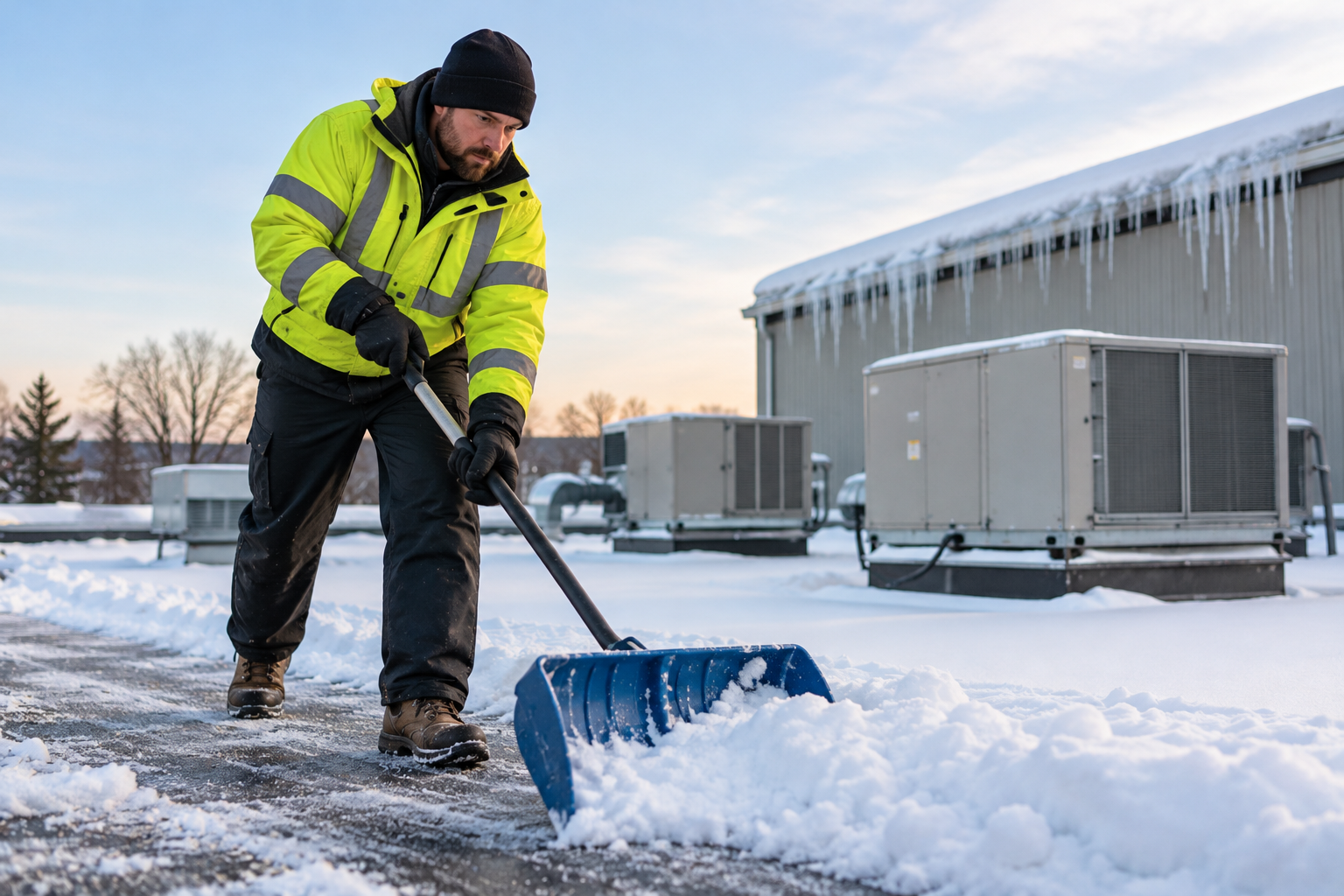
Never send untrained employees onto an icy commercial roof to remove snow. Improper removal can damage roofing membranes and expose workers to serious fall hazards.
If significant accumulation raises concerns, contact qualified roofing and structural professionals to determine the safest response.
5. Check for Interior Signs of Water Damage
Roof problems are not always visible from outside.
Facility managers should periodically check ceilings, upper walls, insulation areas, and spaces beneath rooftop equipment.
Watch for water stains, dripping, damp insulation, or unusual ceiling changes.
Document any concerns and arrange a professional evaluation. If the roof appears to be sagging or making unusual structural noises, keep people away from the affected area and seek urgent professional assistance.
How Can Michigan Businesses Prevent Ice-Related Roof Damage?
Preventing winter roof damage starts with understanding how water moves across the building.
On sloped roofs, ice dams may form when melting snow refreezes near colder roof edges. The National Weather Service explains how this process can trap water and contribute to leaks.
Commercial flat roofs face a related but different concern: ice can block drains and prevent meltwater from escaping.
Property managers should focus on clear drainage paths, properly maintained roofing details, and prompt attention to developing leaks.
For additional winter guidance, visit the National Weather Service Guide to Preventing Roof Ice Dams.
When Should You Call a Commercial Roofing Contractor?
Some winter roofing problems require immediate professional attention.
Contact a roofing contractor when you notice recurring leaks, damaged flashing, blocked drainage that cannot be safely addressed, or visible changes in the roof surface.
A professional can determine whether the building needs localized repairs, additional inspection, or a more extensive solution.
Businesses in Grand Blanc, Fenton, Flint, and nearby communities should consider arranging service before severe winter weather limits access and repair opportunities.
Frequently Asked Questions About Winter Commercial Roof Care
How often should a commercial roof be inspected in Michigan?
A common starting point is twice yearly, typically in spring and fall, with additional inspections after significant storms. Inspection frequency should reflect the roof's condition, manufacturer requirements, and building needs.
Can heavy snow damage a commercial flat roof?
Yes. Excessive snow accumulation can place significant loads on a building. Risk depends on the roof structure, snow density, drifting, and other conditions. A qualified professional should assess concerning situations.
Should commercial property owners remove snow themselves?
No. Snow removal on commercial roofs involves fall hazards and the possibility of damaging roofing materials. Qualified professionals should evaluate whether removal is necessary and perform the work safely.
Can commercial roof leaks be repaired during winter?
Some repairs are possible during winter, but available methods depend on temperature, moisture, roofing materials, and site conditions. A contractor can recommend appropriate temporary or permanent solutions.
Prepare Your Commercial Roof Before Michigan Winter Arrives
Waiting until water enters your building can make a manageable roofing issue more disruptive.
By The Square, LLC helps commercial property owners prepare for Michigan's demanding weather with roof inspections, maintenance, repairs, and restoration services.
With over 30 years of roofing experience, the company serves Grand Blanc and communities within an approximately 80-mile radius.
Schedule a commercial roofing inspection today.
Call (248) 881-5408 or visit By The Square, LLC to request an estimate and discuss your building's winter roofing needs.
Winter Commercial Roof Care in Michigan: Preventing Snow and Ice Damage
Need Commercial Roofing Services?
Contact By The Square, LLC today for dependable commercial roofing services!
Call
(248) 881-5408 for 24/7 assistance.
Recent Posts