Commercial roof drainage problems can lead to standing water, leaks, damaged insulation, and costly disruptions for business owners. Common causes include clogged drains, poor roof slope, damaged gutters, and deteriorating drainage components. The best solution is to identify the source of the problem, clear obstructions safely, and have a qualified commercial roofing contractor evaluate recurring water buildup. For property owners in Grand Blanc, Michigan, regular drainage inspections are especially important before heavy rain, snow, and freezing temperatures arrive.
Why Proper Commercial Roof Drainage Matters
Commercial roofs are designed to direct rainwater and melting snow toward drains, gutters, or scuppers. When these systems work properly, water moves away from vulnerable roofing areas and the building structure.
However, many commercial buildings have low-slope roofing systems. Even a small drainage issue can allow water to collect in certain areas.
Michigan's changing weather adds another challenge. Heavy rainfall, autumn debris, snow accumulation, and freeze-thaw cycles can expose existing drainage weaknesses.
For warehouses, offices, retail buildings, and industrial properties, unresolved drainage problems can affect daily operations and the condition of the building.
What Causes Commercial Roof Drainage Problems?
Understanding the cause is the first step toward choosing the right repair.
1. Clogged Roof Drains
Leaves, dirt, roofing debris, and other materials can collect around roof drains.
When a drain becomes blocked, rainwater may remain on the roof instead of flowing into the drainage system.
This is especially common after autumn leaf buildup or severe storms.
2. Improper Roof Slope
Flat roofs are not supposed to be completely level. They generally need enough slope to direct water toward designated drainage points.
If a roof has inadequate slope or has developed low areas, water may collect even when drains are clear.
Persistent ponding can indicate a design, installation, or structural issue requiring professional evaluation.
3. Damaged Gutters and Scuppers
Some commercial buildings use gutters or scuppers to move water away from the roof.
Loose connections, corrosion, debris, or damaged components can interfere with drainage.
Water may then overflow onto walls, collect near entrances, or remain on the roofing surface.
4. Deteriorating Roofing Materials
Aging membranes, damaged seams, and weakened flashing can allow water to enter the roofing system.
Although these issues may not directly cause a blocked drain, they can make standing water more damaging.
A roof with both drainage and membrane problems may require more than a simple cleaning.
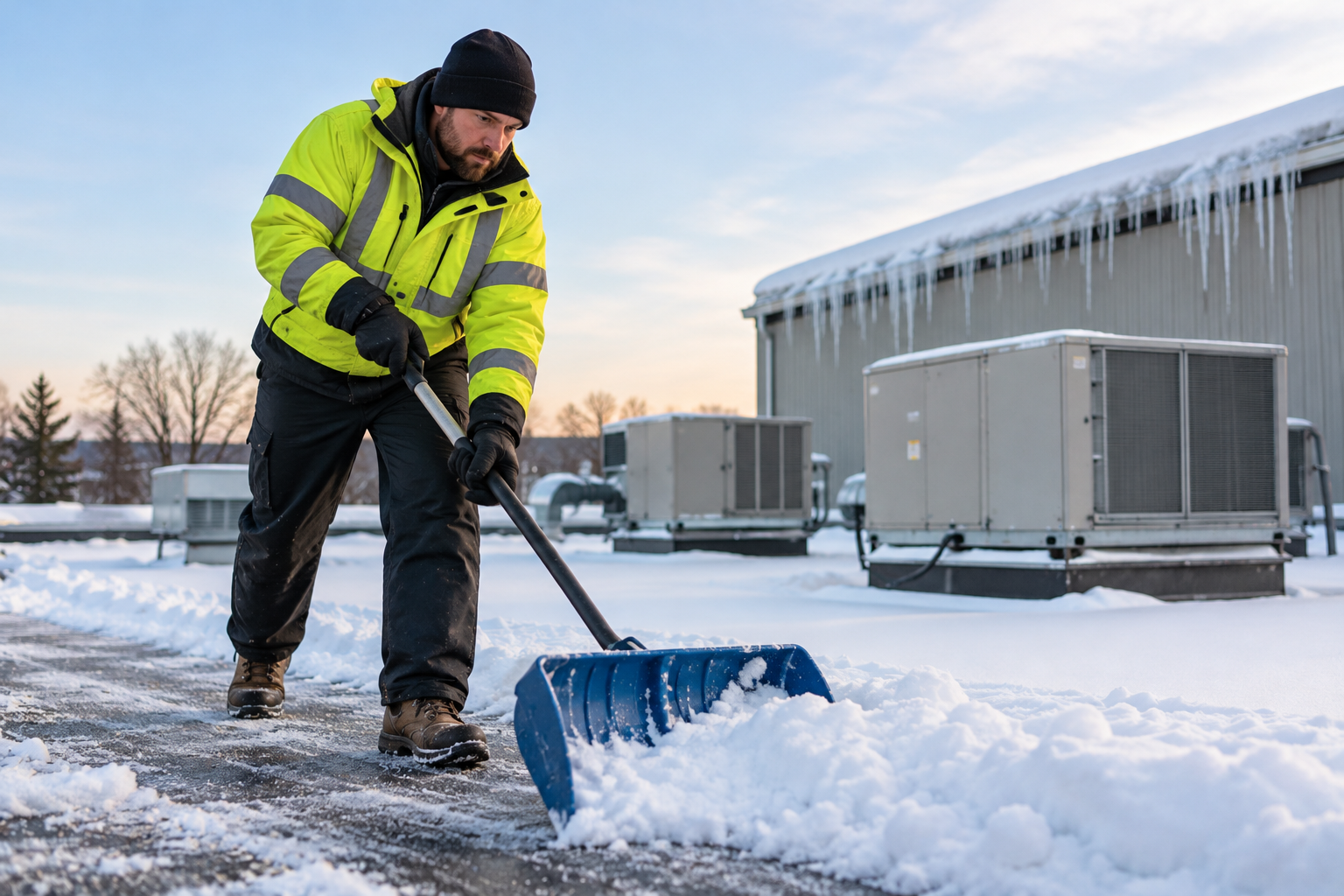
5. Snow and Ice Blockages
Michigan winters create additional drainage challenges.
Snow can cover drains, while ice may obstruct drainage paths during freezing conditions.
When temperatures rise, melting snow needs a clear route off the roof. Otherwise, water may accumulate and increase the risk of leaks.
Warning Signs Your Commercial Roof Is Not Draining Properly
Commercial property owners should watch for the following conditions:
- Standing water: Puddles remain on the roof well after rainfall.
- Recurring ceiling stains: Water marks appear in the same interior locations.
- Overflowing gutters: Water spills over drainage components during storms.
- Debris around drains: Leaves or roofing materials block water flow.
- Damaged roofing seams: Membrane connections show separation or deterioration.
- Unusual roof surface changes: Depressions or sagging areas become visible.
Standing water does not always mean a roof has failed. However, repeated ponding should be investigated rather than ignored.
If visible sagging suggests a structural concern, restrict access to the affected area and seek professional assistance promptly.
How Are Commercial Roof Drainage Problems Fixed?
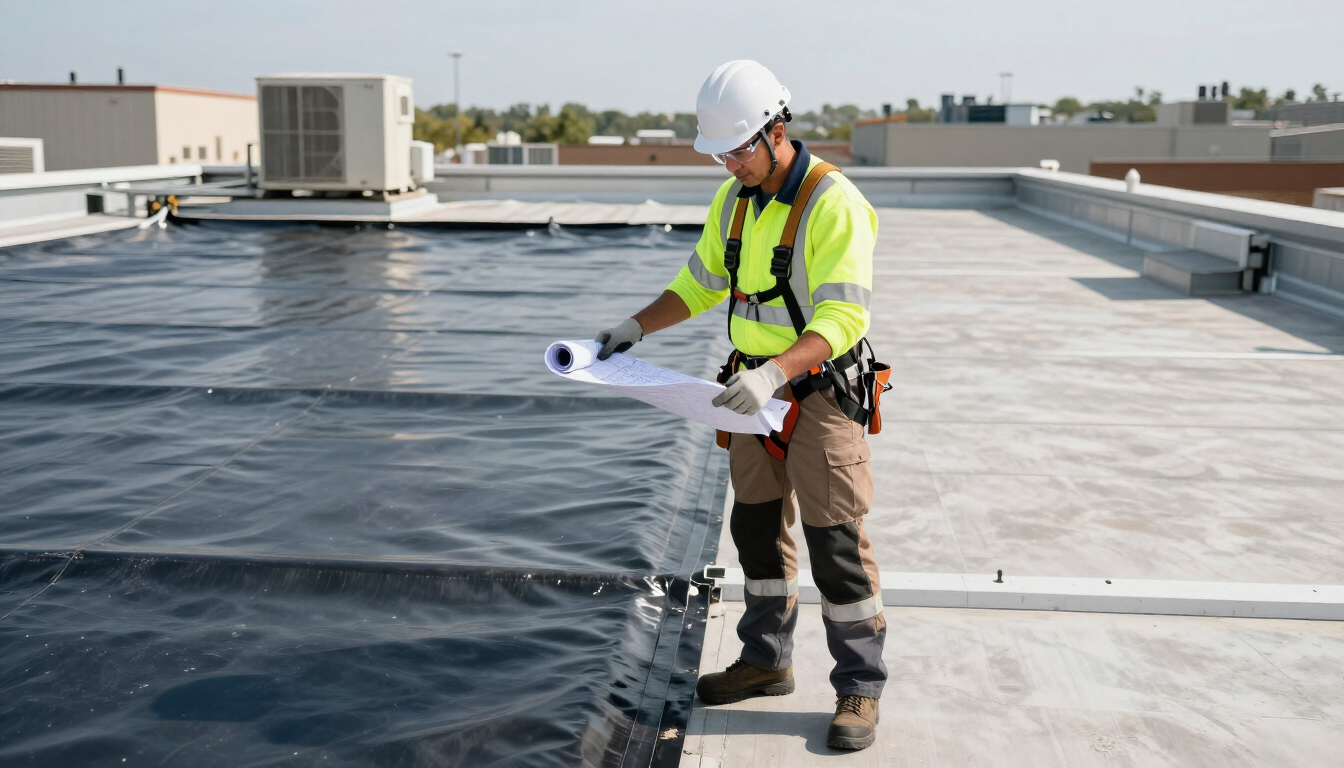
The right solution depends on the roofing system and the underlying cause.
Drain Cleaning and Debris Removal
When blockages are responsible, qualified roofing professionals can remove debris and check whether water flows correctly.
Regular cleaning is often an important part of preventing future drainage problems.
Drainage Component Repairs
Damaged gutters, scuppers, drain assemblies, or connections may need repair or replacement.
A contractor should also inspect the surrounding membrane and flashing to confirm that the drainage opening remains watertight.
Roof Slope and Ponding Corrections
If water consistently collects in low areas, the solution may involve correcting drainage slopes, installing suitable tapered insulation during roofing work, or making other system-specific improvements.
These changes require professional planning. Simply adding another drain may not resolve the underlying problem.
Membrane and Flashing Repairs
If drainage problems have contributed to leaks, the roofing membrane, seams, and flashing should be examined.
Localized repairs may be appropriate when the surrounding roofing system remains in serviceable condition.
How Can Michigan Businesses Prevent Drainage Issues?
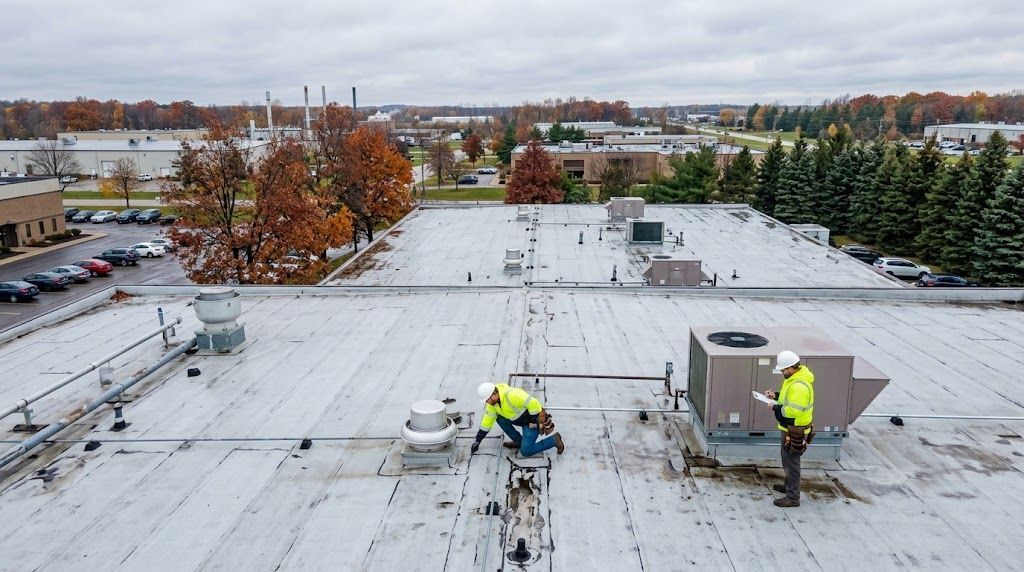
Preventive maintenance helps property owners identify drainage problems before they interrupt business operations.
A practical drainage maintenance routine includes:
- Scheduling roof inspections in spring and fall.
- Checking drainage systems after significant storms.
- Removing debris before winter weather arrives.
- Monitoring recurring areas of standing water.
- Documenting leaks, repairs, and inspection findings.
- Keeping unauthorized personnel off the roof.
Facility managers should also ensure rooftop HVAC work does not leave debris near drainage openings.
For general guidance on managing stormwater and building runoff, visit the U.S. Environmental Protection Agency.
Frequently Asked Questions About Commercial Roof Drainage
How long can water sit on a commercial flat roof?
Some temporary water accumulation may occur after rainfall. However, water that remains for an extended period, especially beyond approximately 48 hours under suitable drying conditions, deserves professional evaluation.
Can clogged roof drains cause interior leaks?
Yes. Blocked drains can allow water to accumulate around vulnerable seams, flashing, and roof penetrations. If those areas are damaged, water may enter the building.
Does standing water mean a commercial roof needs replacement?
Not necessarily. Some drainage issues can be corrected through cleaning, localized repairs, or drainage improvements. Replacement decisions depend on the roof's overall condition and the cause of the problem.
How often should commercial roof drains be inspected?
Spring and fall are useful starting points, with additional checks after major storms. Buildings surrounded by trees or exposed to frequent debris may need more attention.
Protect Your Commercial Building With Better Roof Drainage
Drainage problems rarely improve on their own. Addressing blocked drains, recurring ponding, and damaged roofing details early can help protect your building and reduce unexpected interruptions.
By The Square, LLC serves commercial property owners in Grand Blanc, Flint, Fenton, Burton, Davison, and surrounding Michigan communities.
With more than 30 years of roofing experience, the company helps businesses evaluate roofing concerns and identify practical repair and maintenance solutions.
Concerned about standing water or a leaking commercial roof?
Call (248) 881-5408 or visithttps://www.bythesquare.net/ to request a commercial roof inspection and discuss your property's drainage needs.
Commercial Roof Drainage Problems: Causes, Warning Signs, and Solutions
Need Commercial Roofing Services?
Contact By The Square, LLC today for dependable commercial roofing services!
Call
(248) 881-5408 for 24/7 assistance.
Recent Posts